
Every dog owner knows the cold spike of panic when a leash suddenly goes slack. You look down, and your dog has slipped right out of their harness, standing loose near a busy street or darting toward a distraction.
Dogs are master escape artists. Whether they back out when startled, wriggle free due to a deep chest and narrow waist, or squirm out during a high-anxiety moment, standard standard H-style or step-in harnesses often fail to hold them.
Finding a true harness for dogs that escape proof requires understanding why standard gear fails and how specialized ergonomic designs secure your pet without restricting movement. This comprehensive guide covers how anti-escape harnesses work, key features to look for, fitting instructions, and safety solutions for your furry Houdini.
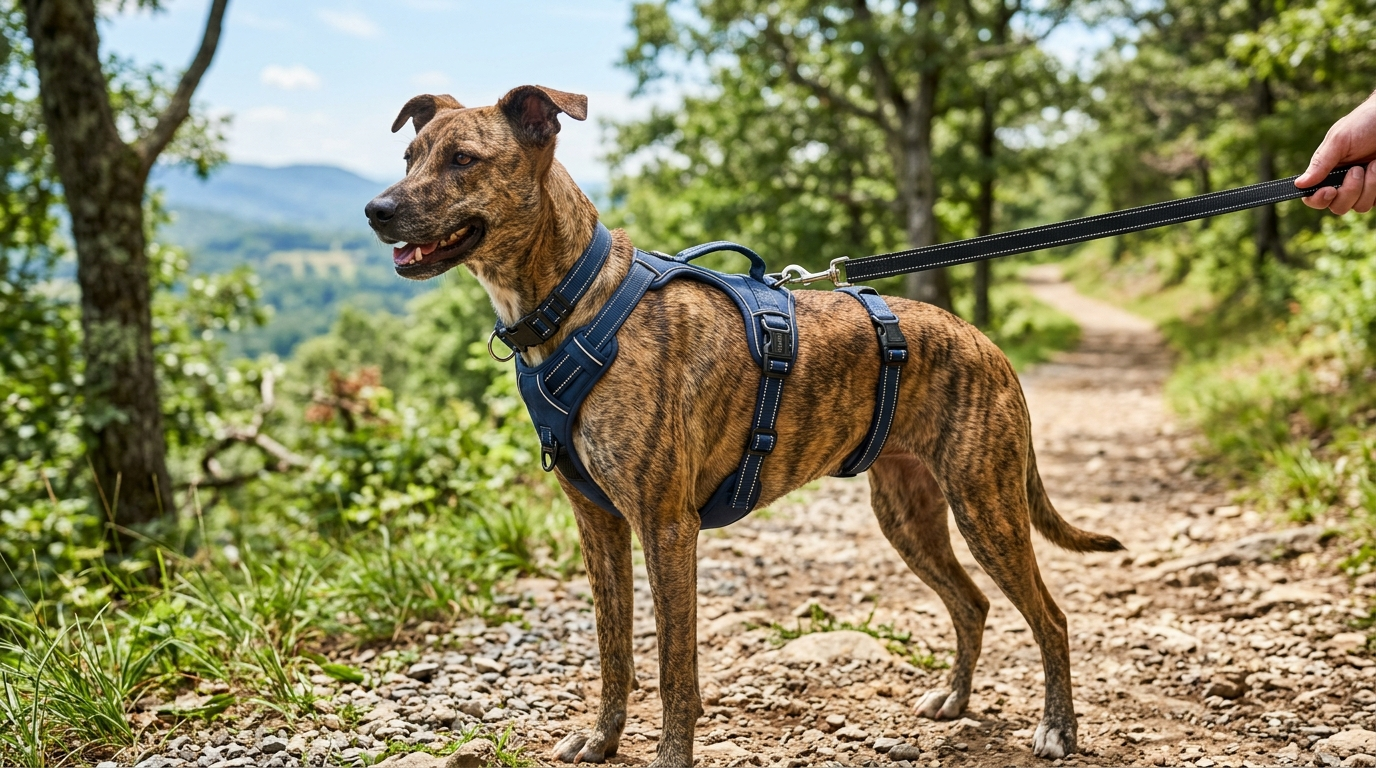
Why Standard Harnesses Fail “Houdini” Dogs
To understand why an escape-proof design is necessary, it helps to examine how regular harnesses fail under real-world conditions.
The “Backing Out” Motion
Most standard dog harnesses are designed to withstand forward pulling. When a dog pulls straight ahead, the chest strap tightens against the ribcage, keeping the harness in place.
However, when a frightened or stubborn dog stops, lowers its head, tucks its ears, and pulls back against the leash, standard harnesses slide right off. The dog’s shoulders collapse inward, allowing the neck and chest loops to glide over their head in seconds.
Anatomical Challenges
Certain breeds feature physical proportions that make standard off-the-rack gear inadequate:
-
Deep-Chested Breeds: Greyhounds, Whippets, Boxers, and German Shepherds have large ribcages paired with narrow waists. Once a harness slips past the widest point of the ribcage, it slides off completely.
-
Flexible or Slippery Breeds: Dachshunds, Corgis, and Bulldogs have unique shoulder angles and thick necks where chest-to-neck proportions make standard sizing loose or ill-fitting.
-
Rescue & High-Anxiety Dogs: Rescue dogs reacting to environmental triggers often bolt or twist violently when panicked, stressing strap attachment points beyond standard design limits.
Anatomy of a True Escape-Proof Dog Harness
Not all “anti-escape” gear is built equally. A secure harness for dogs that escape proof relies on key mechanical and anatomical design features:
+-----------------------------------------------------------------------+
|                       ESCAPE-PROOF HARNESS ANATOMY                    |
+-----------------------------------------------------------------------+
|                                                                       |
|      [ Neck Strap ] ---- Top Handle for Emergency Control            |
|            |                                                          |
|      [ Chest Strap ] --- Primary Pull-Distribution Points              |
|            |                                                          |
|      [ Belly Strap ] --- Crucial 3rd Strap (Sits Behind Ribcage)      |
|                                                                       |
+-----------------------------------------------------------------------+
1. The 3-Strap Configuration (The Game Changer)
The single most important feature of an anti-escape harness is the third strap. While standard harnesses feature two straps (neck and chest), escape-proof models add a third strap that rests around the narrowest part of the dog’s waist, behind the ribcage.
Because the ribcage is wider than the waist, it is physically impossible for the dog to back out through the third strap when properly adjusted. The harness cannot slide forward over the chest.
2. Multi-Point Adjustment
An escape-proof harness must fit like a custom suit. Look for models offering 5 to 7 adjustment points across the neck, chest, belly, and back panels to eliminate gaps where paws or snouts could get leverage.
3. Reinforced Hardware & Webbing
Scared dogs generate sudden impact force when lunging or twisting. Secure harnesses feature:
- Military-grade nylon or polyester webbing for high tensile strength.
- Reinforced box-stitching at high-stress stress points.
- Heavy-duty aluminum or steel D-rings (often both front-clip and back-clip options). Explore our durable dog collars and leashes collection for maximum walk security.
- Locking plastic side-release buckles that prevent accidental unclipping.
4. Padded Chest and Belly Panels
Security should not come at the expense of comfort. Foam-padded, breathable mesh panels distribute pressure evenly across the sternum rather than concentrating force on sensitive neck tissue or soft belly muscle.

Key Features Comparison: Standard vs. Escape-Proof Harnesses
| Feature | Standard Step-In Harness | No-Pull Front-Clip Harness | 3-Strap Escape-Proof Harness |
| Number of Straps | 2 (Neck/Chest) | 2 (Neck/Chest) | 3 (Neck, Chest, Waist) |
| Back-Out Protection | Low | Low to Moderate | Maximum Security |
| Adjustment Points | 2 to 4 | 4 | 5 to 7 |
| Control Handle | Rarely Included | Optional | Integrated Top Handle |
| Best For | Calm, trained walkers | Dogs that pull forward | Escape artists, rescue & anxious dogs |
| Pressure Distribution | Centered on chest/neck | Shoulder-focused | Full torso distribution |
How to Properly Fit an Escape-Proof Harness
Even the highest-rated escape-proof harness will fail if fitted incorrectly. Follow this step-by-step fitting process to ensure maximum safety and comfort:
Step 1: Accurate Measurement
Do not guess size based on weight alone. Use a soft fabric tape measure to check three vital areas:
- Neck Circumference: Measure at the widest part of the base of the neck.
- Girth (Chest): Measure around the widest part of the ribcage, about 2 inches behind the front legs.
- Waist: Measure around the narrowest part of the torso, just behind the last rib.
Step 2: The Two-Finger Rule
Once you buckle the harness onto your dog, check the tension on all three straps using the two-finger test:
- Slide two fingers flat between the strap and your dog’s body.
- The fit should feel snug—your fingers should slide under with slight resistance, but without squeezing your fingers or pinching the dog’s skin.
- If you can fit three or four fingers, the strap is too loose, giving your dog room to twist or slip out.
Step 3: Check the Third Strap Position
Ensure the waist (third) strap rests behind the ribcage, but not so far back that it presses into soft tissue or sensitive groin areas. It should wrap snugly around the narrowest part of the abdomen without restricting breathing or natural gait.
Essential Safety Protocols for Escaper-Prone Dogs
While investing in a dedicated harness for dogs that escape proof is the most effective physical deterrent, combining gear with proper safety protocols reduces escape risks to zero.
1. Dual-Leash or Harness-to-Collar Safety Clips
For extreme escape artists or newly adopted rescue dogs, use a backup safety tether (a short strap with clips on both ends). Connect one end to the harness D-ring and the other end to a well-fitted martingale collar. If the harness buckles ever fail, the leash remains connected to the collar.
2. Utilize the Built-In Traffic Handle
Most top-tier escape-proof harnesses include a sturdy handle along the back panel. Use this handle to hold your dog close during high-stress situations:
- Crossing busy intersections.
- Passing aggressive or unleashed dogs.
- Handling sudden fireworks, sirens, or loud construction noises.
3. Avoid Extendable (Retractable) Leashes
Retractable leashes maintain constant tension on the harness, which encourages dogs to pull or back up against the pressure. Furthermore, if dropped, the heavy plastic handle snaps back toward the dog, terrifying anxious pets and triggering a bolting reaction. Stick to standard 4-foot or 6-foot nylon/biothane leashes.
Frequently Asked Questions (FAQ)
Can a dog slip out of a 3-strap harness?
While no product can claim 100% immunity under every hypothetical scenario, a correctly fitted 3-strap harness makes backing out mechanically impossible. Because the third strap rests behind the widest part of the ribcage, the harness cannot slide forward over the dog’s body.
Are escape-proof harnesses safe for everyday walks?
Yes. Quality escape-proof harnesses feature padded, ergonomic panels that distribute weight evenly across the torso, making them comfortable for daily walks, hiking, and training sessions.
Will an escape-proof harness stop my dog from pulling?
Many escape-proof harnesses feature both front (chest) and back leash attachment points. Using the front D-ring acts as a no-pull steering mechanism, redirecting your dog’s forward momentum toward you when they pull.
Is an escape-proof harness suitable for small dogs?
Yes, but choosing an option sized specifically for small breeds is essential. Lightweight webbing, compact buckles, and soft mesh linings ensure small dogs remain secure without carrying extra bulk or weight.
Final Thoughts: Peace of Mind on Every Walk
Walking your dog should be a relaxing experience, not a source of stress. Slicing through the worry of sudden escapes starts with switching to gear designed for your dog’s anatomy.
By choosing a dedicated harness for dogs that escape proof featuring a 3-strap design, multi-point adjustments, and durable materials, you secure your dog during walks and enjoy every outing with total confidence.