
Anxiety in senior dogs at night is one of the most heart-wrenching and exhausting challenges a pet parent can face. Watching an aging dog pace restlessly, whine in the dark, or stare blankly into corners while you struggle to sleep leaves you feeling helpless.
If your older dog has suddenly started pacing, panting, or showing signs of distress once the sun goes down, they are not doing it on purpose or being disobedient. Nighttime anxiety in senior dogs is almost always tied to underlying physical changes, cognitive shifts, or sensory decline.
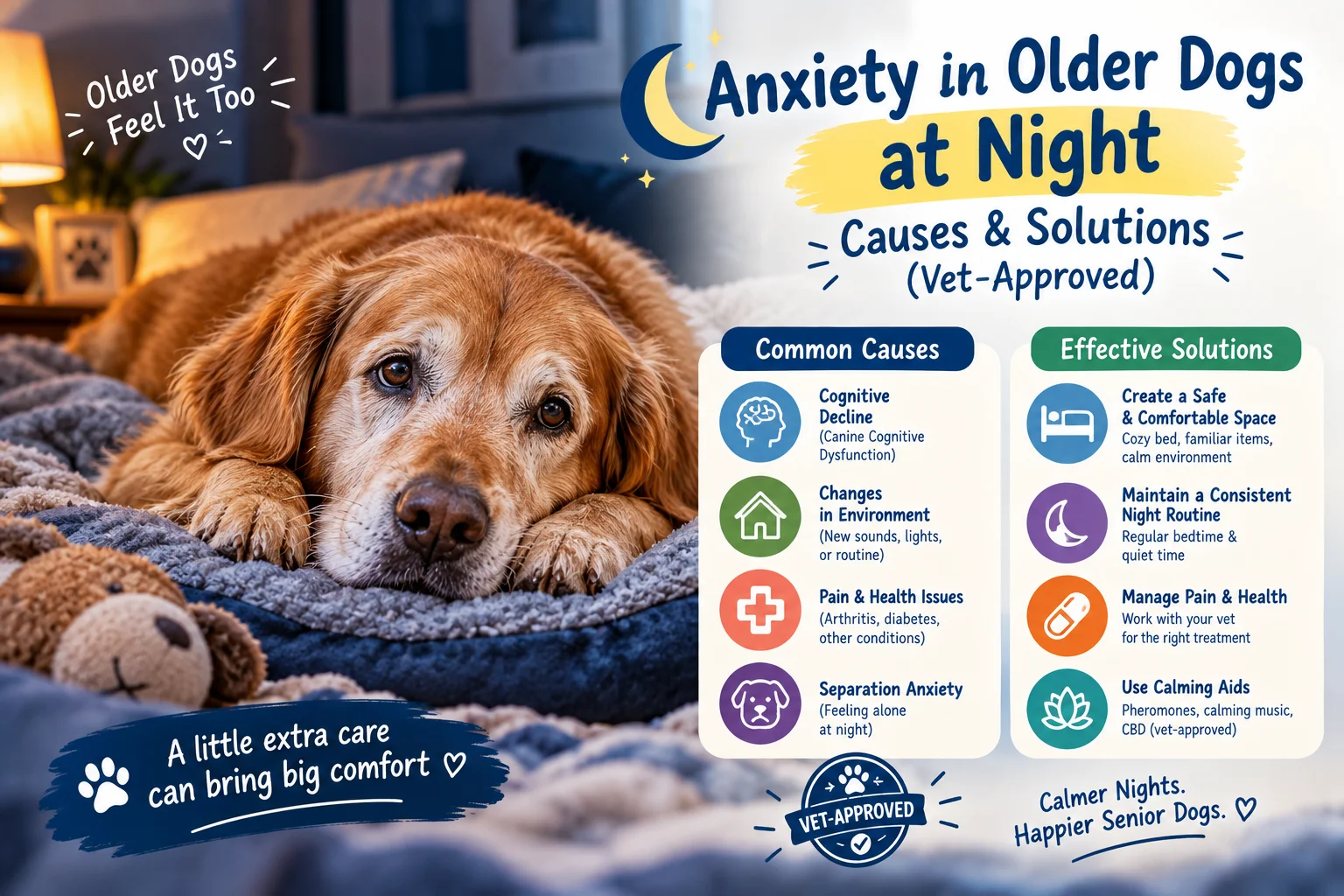
This comprehensive guide covers the root causes of anxiety in older dogs at night, how to spot the warning signs, and vet-approved solutions to help your companion—and you—get a peaceful night’s sleep.
Quick Summary: Why Is My Older Dog Anxious at Night?
The Short Answer: Nighttime anxiety in senior dogs is most commonly caused by Canine Cognitive Dysfunction (CCD or “dog dementia”), undiagnosed physical pain (like arthritis), failing vision or hearing, or urinary/digestive issues. Relief comes from identifying the underlying medical cause with a vet, creating a comfortable, well-lit sleeping environment, and establishing a soothing evening routine.
Common Signs of Nighttime Anxiety in Senior Dogs
Senior dog anxiety doesn’t always look like trembling under the bed. At night, symptoms often manifest in subtle or repetitive behaviors:
- Pacing and Aimless Wandering: Walking back and forth across rooms or up and down hallways without settling.
- Getting Stuck in Corners or Behind Furniture: Loss of spatial awareness leading to distress when they can’t turn around.
- Excessive Panting, Whining, or Barking: Vocalizing or heavy breathing despite a cool room temperature.
- Sleep-Wake Cycle Reversal: Sleeping soundly all day long, only to become active and agitated as night falls.
- Inability to Settle: Lying down for two minutes, getting up, moving to another spot, and repeating the cycle all night.
- Shadow Staring or Disorientation: Staring at walls or appearing not to recognize familiar family members in dim light.
Why Do Senior Dogs Get Anxious at Night? (4 Main Causes)
Understanding why your dog is struggling is the key to choosing the right solution. Veterinarians generally point to four primary culprits for senior dog night anxiety:
1. Canine Cognitive Dysfunction (CCD / Dog Dementia)
Canine Cognitive Dysfunction is a neurodegenerative condition similar to Alzheimer’s disease in humans. As brain chemistry and pathways alter, dogs lose their internal clock and spatial navigation skills.
This frequently triggers a phenomenon known as “Sundowning”—a state where confusion and agitation spike as daylight fades and ambient household noise dies down.
2. Chronic Joint Pain and Arthritis
During the day, movement keeps joints lubricated, and everyday household activities distract your dog from discomfort.
At night, two things happen:
- Prolonged Immobility: Lying in one position for hours causes stiff, arthritic joints to throb.
- Lack of Distraction: In a quiet, dark room, physical pain becomes the only stimulus your dog feels, leading to restless pacing in an attempt to find a pain-free position.
3. Vision and Hearing Loss
Age-related cataracts, nuclear sclerosis, or progressive hearing loss dramatically alter how a dog perceives their home.
When ambient light drops, shadows lengthen and familiar shapes disappear. A dog with failing sight can easily become frightened by dark rooms, while a hearing-impaired dog can be startled by low-frequency household sounds (like a furnace turning on) that they can no longer clearly identify.
4. Increased Urgency to Eliminate
Aging organs, chronic kidney disease, diabetes, or urinary tract infections (UTIs) make it difficult for older dogs to hold their bladder overnight. The anxiety you observe may simply be panic about having an accident in the house.
How to Calm an Older Dog at Night: Step-by-Step Solutions
Addressing nighttime anxiety requires a multi-layered approach combining environmental tweaks, daily routines, and medical support.
       ┌──────────────────────────────────────────────────────────┐
       │   MULTI-LAYERED APPROACH TO SENIOR DOG NIGHT ANXIETY     │
       └────────────────────────────┬─────────────────────────────┘
                                    │
         ┌──────────────────────────┼──────────────────────────┐
         ▼                          ▼                          ▼
┌──────────────────┐       ┌──────────────────┐       ┌──────────────────┐
│  ENVIRONMENTAL   │       │  DAILY ROUTINE   │       │ VET & MEDICAL    │
├──────────────────┤       ├──────────────────┤       ├──────────────────┤
│• Plug-in Lights  │       │• Sniff Walks     │       │• Pain Mgmt       │
│• Orthopedic Bed  │       │• Fixed Bedtime   │       │• DAP Diffusers   │
│• White Noise     │       │• Evening Enrichment│     │• Melatonin/Meds  │
└──────────────────┘       └──────────────────┘       └──────────────────┘
1. Environmental Adjustments
- Install Plug-in Nightlights: Place low-wattage LED nightlights along hallways, near their bed, and by their water bowl. Eliminating pitch-black shadows reduces disorientation for dogs with failing eyesight.
- Upgrade to Orthopedic Memory Foam: Standard dog beds compress under weight, offering little support for aching hips and spines. A high-density memory foam orthopedic bed distributes weight evenly and cushions pressure points.
- Use White Noise or Soft Classical Music: A white noise machine or soothing classical playlist hides sudden nighttime noises (wind, pipes creaking, traffic) that startle anxious senior dogs.
- Secure the Sleeping Area: If your dog gets stuck behind furniture or wanders into dangerous areas (like staircases), use baby gates to keep them in a safe, carpeted, well-padded room.
2. Daytime Enrichment & Evening Routines
- Prioritize “Sniff Walks”: Physical exertion can aggravate arthritis, but mental exertion tires out a senior brain safely. Take your dog on slow, sniff-focused walks where they can process scents at their own pace.
- Maintain Rigid Consistency: Keep feeding times, final bathroom breaks, and “lights out” strictly consistent. Predictability reduces cortisol levels in anxious pets.
- Offer a Pre-Bedtime Brain Toy: A licksmat spread with plain canned pumpkin or a low-calorie treat engages the vagus nerve, inducing a natural calming effect before sleep.
3. Vet-Approved Medical & Supplement Options
Always consult your veterinarian before introducing supplements or over-the-counter aids.
- Dog Appeasing Pheromones (DAP): Synthetic pheromone diffusers (like Adaptil) mimic the nursing mother’s calming scents. Plug one near your dog’s sleeping area.
- Melatonin: Often recommended by veterinarians to help reset disrupted sleep-wake cycles in dogs with cognitive decline.
- Targeted Joint Pain Relief: If arthritis is driving the restlessness, your vet may prescribe NSAIDs, joint supplements (glucosamine/chondroitin), or modern monoclonal antibody treatments (like Librela).
- Prescription Cognitive Medications: For confirmed Canine Cognitive Dysfunction, FDA-approved medications like Selegiline (Anipryl) can help slow cognitive decline and improve sleep patterns.
When to See the Vet Immediately
Schedule a veterinary evaluation if you notice any of the following red flags:
- Sudden, extreme onset of anxiety (developing overnight rather than gradually over months).
- Signs of acute pain (crying out, guard responsiveness when touched, sudden limping).
- Incontinence or sudden loss of house training.
- Disorientation that persists into bright daylight hours.
Frequently Asked Questions
Should I sleep near my senior dog if they are anxious at night?
Yes. Moving your dog’s bed into your bedroom—or sleeping in the living room with them during severe flare-ups—often provides the sensory reassurance they need. Hearing your breathing and smelling your presence directly lowers their heart rate and anxiety.
Is senior dog night pacing a sign of pain or dementia?
It can be both. Pacing accompanied by lip-licking, panting, or frequent position changes usually indicates physical discomfort or joint pain. Pacing accompanied by staring at walls, walking into corners, or failing to recognize surroundings points toward cognitive dysfunction.
Can I give my old dog human sleep aids like Benadryl?
Never give your dog human sleep aids, melatonin with Xylitol, or medication without explicit veterinary guidance. Many human products contain artificial sweeteners or dosages that are toxic or fatal to dogs.