
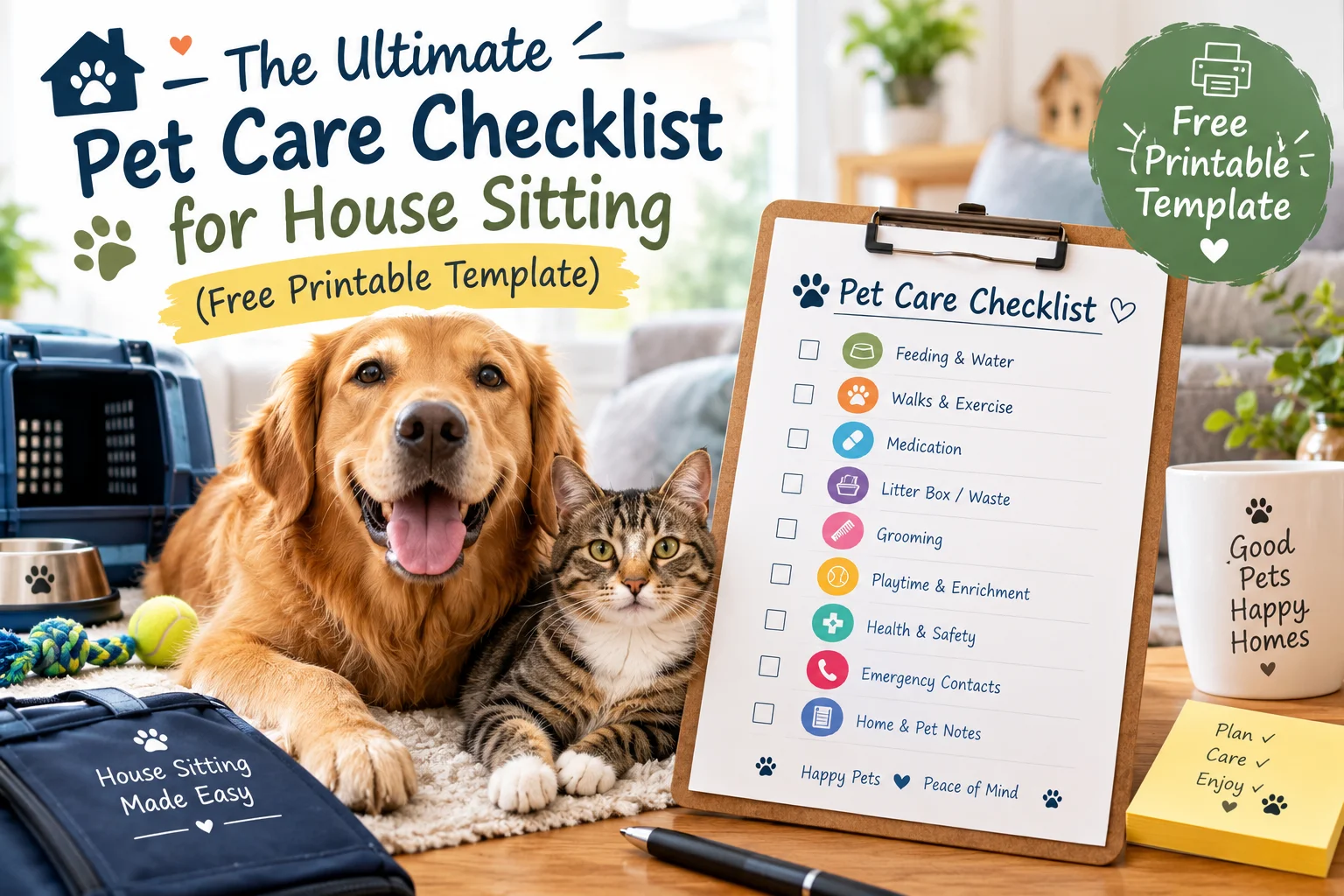
Leaving your pets and home under the care of a house sitter can feel nerve-wracking. Whether you are hiring a professional overnight sitter or hosting a trusted friend, handing off your household without proper instructions is a recipe for miscommunication, missed medications, or emergency stress. This comprehensive pet care checklist for house sitting ensures your animals remain safe, happy, and on schedule while your home stays secure.
1. Emergency & Medical Protocols (The Priority Checklist)
When an emergency occurs, every minute counts. Your house sitter should never have to search through drawers or scramble online to find your veterinarian’s contact details or your pet’s medical history. Place this emergency section right on page one of your house sitting binder.
Veterinary Contacts & Emergency Clinic Details
- Primary Veterinary Clinic: Clinic name, primary doctor, phone number, physical address, and operating hours.
- 24/7 Emergency Pet Hospital: Address and direct phone line to the nearest round-the-clock emergency hospital. Call ahead to confirm their current intake policy.
- Poison Control Hotline: ASPCA Animal Poison Control Center (888-426-4435) or Pet Poison Helpline (855-764-7661). *Note: Phone consultation fees may apply.*
Veterinary Medical Treatment Authorization Form
Veterinary emergency centers generally cannot proceed with invasive surgeries or diagnostic procedures without explicit consent from the legal owner. Leave a signed physical letter stating:
“I, [Your Name], hereby authorize [Sitter Name] to seek emergency veterinary care for my pet(s) [Pet Names] during the period of [Start Date] to [End Date]. In the event I cannot be reached, I authorize emergency treatment up to the total amount of $[Financial Cap, e.g., $1,500].”
Medication Administration Schedules
Errors in medication dosages represent one of the most common pet care mistakes during house sitting stays. Detail every medication using the clear layout below:
| Pet Name | Medication Name | Exact Dosage | Timing & Frequency | Administration Trick / Method |
|---|---|---|---|---|
| Bella (Dog) | Apoquel 16mg | 1 Tablet | 8:00 AM Daily | Wrap in a piece of cheddar cheese; do not mix in kibble. |
| Milo (Cat) | Methimazole 2.5mg | 1/2 Tablet | 8:00 AM & 8:00 PM | Crush and mix into 1 tablespoon of wet gravy food. |
Identification & Microchip Verification
- Microchip Company & ID Number: Name of the microchip registry (e.g., HomeAgain, AKC Reunite) along with the chip numbers.
- Collar & Tag Status: Ensure tags display your current cell phone number and state if the pet is microchipped.
- Current Photographs: Provide recent, high-resolution clear physical photos of each pet showing unique coat markings, color patterns, or physical identifiers in case a pet slips out the door.
2. Daily Feeding, Hydration & Snack Rules
Maintaining a consistent diet prevents gastrointestinal distress, diarrhea, and anxiety-induced stomach upset while you are away.
Portions, Schedules & Prep Instructions
- Exact Meal Timing: Specify exact hours (e.g., 7:00 AM morning breakfast and 6:00 PM dinner). Avoid vague directions like “feed in the morning.”
- Portion Measuring: State precise measurements using standard measuring cups or grams (e.g., “Exactly 1 level measuring cup of dry kibble,” not “a scoop”).
- Wet vs. Dry Ratios: Detail whether wet food should be mixed with warm water, microwaved for 5 seconds, or mixed thoroughly with dry kibble.
- Food Storage Locations: Note where unopened cans, bag refills, and treats are stored in the pantry or refrigerator.
Fresh Water & Hydration Protocols
- Bowl Locations & Refill Frequencies: Indicate every water bowl location inside and outside the home.
- Water Fountain Care: If using an electronic pet water fountain, instruct the sitter on filling levels, unplugging procedures, and filter checks.
- Ice Preferences & Additives: Mention if your dog prefers ice cubes added during hot afternoons or if dental water additives are required.
Treat Rules & Forbidden Foods
- Approved Treats & Daily Limits: Specify which treats are allowed and maximum quantities per day (e.g., “Maximum 2 dental chews per day after evening walk”).
- Toxic Food Reminders: Remind sitters to keep grapes, raisins, chocolate, onions, garlic, macadamia nuts, and products containing xylitol/birch sugar completely out of reach.
3. Exercise, Walking & Bathroom Routines
Physical activity relieves energy and reduces separation anxiety. Clear rules prevent accidental escapes or dog park conflicts.
Walking Schedules, Equipment & Harnesses
- Walk Timings & Duration: Outline daily walking routines (e.g., “20-minute morning leash walk at 7:30 AM; 30-minute evening walk at 6:30 PM”).
- Harness & Leash Instructions: Specify which leash and harness to use. *Pro Tip: Warn sitters never to attach a leash directly to a training collar or martingale collar if your dog pulls.*
- Reactivity & Trigger Warnings: Clearly state if your dog is reactive to off-leash dogs, squirrels, bicycles, skateboards, or loud trucks. Instruct the sitter on how to manage these situations (e.g., “Cross the street immediately if you spot another dog on a leash”).
- Approved Walking Routes: Highlight safe neighborhoods or nearby parks and list areas to avoid (e.g., streets with construction or high traffic).
Yard Safety & Off-Leash Policies
- Fence & Gate Security: Remind the sitter to check that all backyard latch gates are fully locked before letting pets out.
- Supervision Rules: Explicitly state if pets can be left in the backyard unattended or if active supervision is required at all times.
- Digging & Escape Habits: Inform the sitter if your dog is known to jump low fence lines, dig under gates, or slip through narrow gaps.
Litter Box Care & Waste Disposal
- Scooping & Replacement Frequency: Scoop litter boxes daily (or twice daily for multi-cat households).
- Litter & Bag Storage: Note the locations of extra litter bags, scoopers, litter mat cleaners, and trash bins.
- Outside Dog Waste: Specify waste bag disposal rules (e.g., “Place tied poop bags directly into the outdoor garbage can on the side of the house”).
4. Behavioral Quirks, Anxiety & Triggers
Every pet has unique personality traits. Sharing these details prevents stress and helps your house sitter handle unusual behavior safely.
Anxiety Triggers & Comfort Techniques
- Thunderstorm & Noise Phobias: Provide instructions if your pet is terrified of thunder, heavy rain, or fireworks. Note where comfort jackets (e.g., ThunderShirt) or calming treats are kept.
- Safe Havens & Hiding Spots: Inform the sitter about your pet’s favorite hiding places (e.g., under the guest bed, inside the hallway closet) so they do not panic thinking the pet escaped.
- Separation Protocols: Note how long the pet can comfortably stay home alone (e.g., “Dog cannot be left alone for longer than 4 consecutive hours”).
Household Boundaries & Restricted Zones
- Furniture Rules: Clarify whether pets are allowed on couches, beds, or rugs.
- Off-Limit Rooms: List rooms that must remain closed at all times (e.g., home office, basement, laundry room).
- Door Dashing Hazards: Warn the sitter if your pet rushes open exterior doors or garage entryways.
5. House Sitter Home Access & System Operations
A house sitter cares for both your pets and your property. Clear house instructions prevent lockouts, alarm blunders, and home maintenance issues.
Entry, Security & Smart Home Codes
- Keys & Smart Lock Access: Detail key locations, deadbolt instructions, and digital keypads codes.
- Security System Codes: Write down precise instructions for arming and disarming the home alarm (including stay vs. away modes). Provide the alarm company’s phone number and secret verbal password in case of accidental trips.
- Garage Doors & Gate Remotes: Note keypad codes and remote placements.
Wi-Fi & Home Entertainment Setup
- Wi-Fi Network Name & Password: Display Wi-Fi credentials prominently.
- Streaming Services & TV Remotes: Explain basic TV and streaming controls to keep your sitter comfortable.
Visitor Policies & Overnight Guest Rules
- Guest Allowance: State whether guests or family members are permitted in the house during the stay.
- Scheduled Service Providers: List any anticipated visitors, such as house cleaners, gardeners, pool maintenance techs, or package deliveries.
6. Emergency Household & Safety Protocols
Property emergencies can impact pet safety. Provide clear instructions on where critical utility controls are located.
Utility Shutoffs & Breaker Boxes
- Main Water Shutoff Valve: Location of the main water shutoff key and valve (essential in case of burst pipes).
- Electrical Breaker Panel: Location of the circuit breaker box and labels for main switches.
- Gas Shutoff Valve: Location and safety guidance if applicable.
Trash, Recycling & Housekeeping Duties
- Trash Pickup Days: State which days trash and recycling bins go to the curb and when to pull them back in.
- Plant Watering Schedules: Simple instructions for indoor and outdoor potted plants.
- Mail & Package Handling: Specify where to bring in mail, newspapers, and delivered packages.
7. Species-Specific Considerations (Dogs, Cats, Small Pets)
Dog Sitting Specifics
- Provide leash walking guidelines and harness instructions.
- Outline crate training rules, bedtime routines, and morning potty schedules.
- Clarify dog park policies (many owners prohibit dog parks due to health and fight risks).
Cat Sitting Specifics
- Specify litter box cleaning frequencies and preferred litter brands.
- Note play routines with wand toys, laser pointers, and catnip usage.
- Detail brushing routines for long-haired breeds to prevent hairballs.
Small Pets, Birds & Fish
- Cages & Enclosures: Temperature maintenance, heat lamp schedules, and cage lock instructions.
- Feeding Measurements: Exact pinch/gram amounts for fish or specialized bird diets.
- Fresh Bedding Supplies: Instructions for bedding cleanings and disposal.
8. Printable House Sitting Information Template
Copy, paste, edit, and print this handy summary sheet to leave on your kitchen counter for your house sitter.
PET CARE & HOUSE SITTING INFORMATION SHEET
1. OWNER & DATES
Owner Name(s): ____________________________________
Cell Phone: __________________ Secondary Phone: __________________
Dates Away: _____________ to _____________ Emergency Contact Person: __________________
2. VETERINARY & EMERGENCY INFO
Primary Vet Clinic: ____________________________________ Phone: __________________
24/7 Emergency Hospital: ____________________________________ Phone: __________________
Microchip ID(s): ____________________________________
Pre-Approved Medical Spend Limit: $__________
3. PET DIET & MEDICATION LOG
Pet Name 1: ____________________ Food Brand: ____________________
Breakfast Amount & Time: ____________________ Dinner Amount & Time: ____________________
Medication Instructions: __________________________________________________
4. HOUSEHOLD ACCESS & UTILITIES
Wi-Fi Network Name: ____________________ Password: ____________________
Alarm Code: ____________ Disarm Code: ____________ Alarm Co Phone: ________________
Trash Day: ____________ Recycling Day: ____________
Main Water Shutoff Location: ____________________________________
Electrical Panel Location: ____________________________________
9. Frequently Asked Questions (FAQ)
What should I leave for a pet sitter when house sitting?
You should leave a complete pet care checklist containing vet contact details, signed emergency medical treatment authorization, meal and medication schedules, Wi-Fi passwords, alarm codes, and utility shutoff locations.
How much food should I leave for a house sitter?
Always leave enough food, treats, litter, and medication for the full duration of your trip, plus an extra 3 to 5 days of supply to account for travel delays or emergency extensions.
Should I sign a veterinary treatment authorization form?
Yes. Emergency veterinary clinics require a signed authorization form and a pre-approved financial cap on file before administering major treatment when brought in by a house sitter.
How far in advance should I walk through the checklist with my sitter?
Schedule an in-person walkthrough at least 24 to 48 hours before your departure. This gives your sitter time to review the instructions, meet the pets, test key codes, and ask clarifying questions.