
Choosing the right daily food for a chinchilla is trickier than it looks. Their digestive systems are built almost entirely around fiber, their teeth never stop growing, and they gain weight easily if a diet leans too rich in fat or sugar. That’s exactly the gap Supreme Petfoods built its Science Selective Chinchilla range to fill, and the 1.5kg bag is the size most US owners with one or two chinchillas will end up considering first.
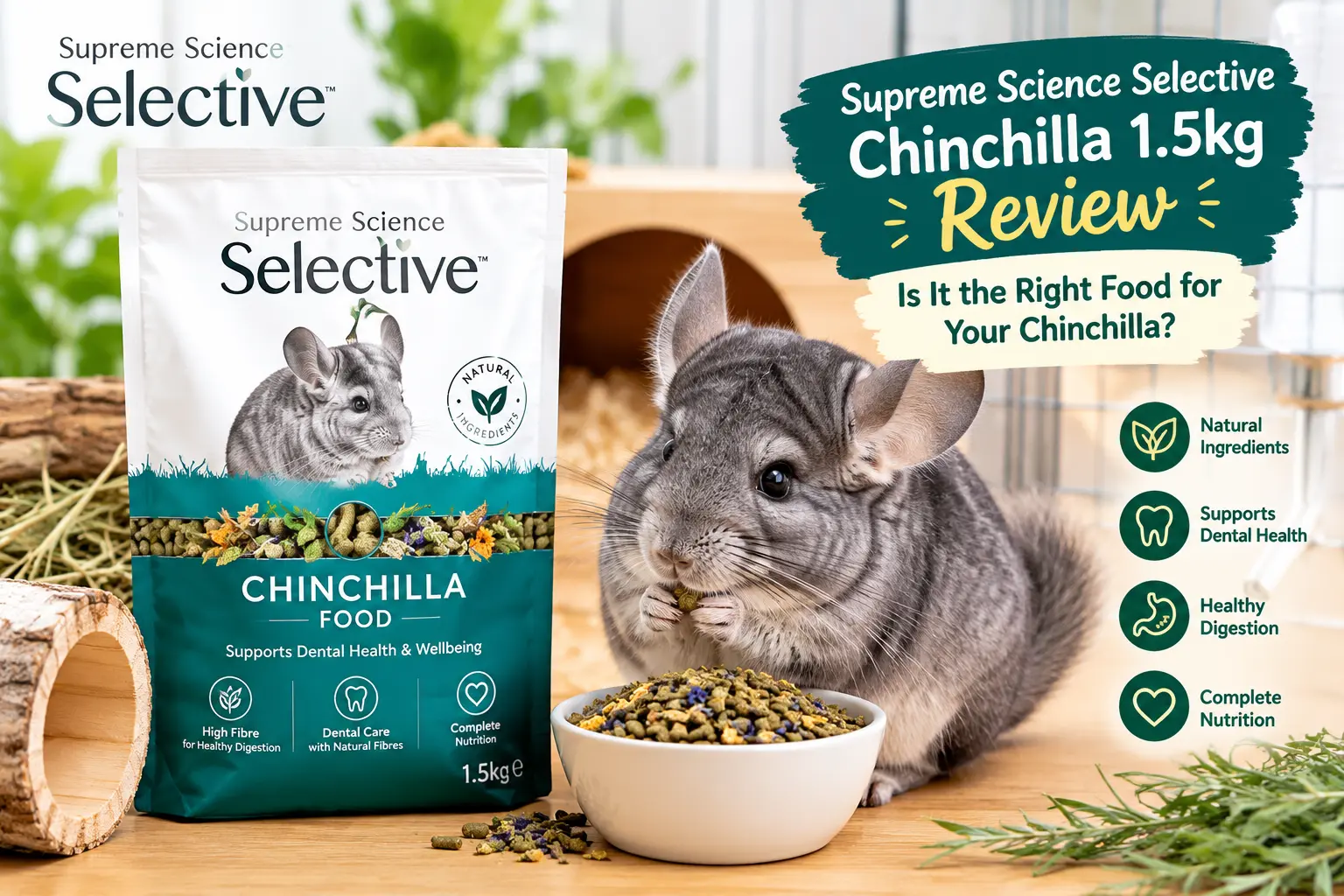
This review walks through what’s actually in the bag, how it compares to other chinchilla foods on the market, who it’s best suited for, and what to check before you buy — using the manufacturer’s published ingredient and nutritional information rather than guesswork.
Quick Verdict
Best for: Owners who want a single-ingredient, high-fiber extruded pellet that discourages selective feeding and supports dental wear.
Main advantage: A nutritionally complete formula built around fiber and low fat, with no added sugar — closely aligned with what veterinary nutrition guidance recommends for chinchillas.
Potential drawback: It’s a UK-formulated product distributed in the US, so pricing and availability vary more by retailer than domestic brands, and it costs more per pound than some mainstream US chinchilla foods.
Overall assessment: For owners focused on digestive and dental health rather than the cheapest bag on the shelf, Science Selective Chinchilla 1.5kg is a well-formulated, ingredient-transparent option worth serious consideration.
What Is Supreme Science Selective Chinchilla Food?
Science Selective Chinchilla is a complete, extruded pellet diet made by Supreme Petfoods, a UK-based small-animal food company whose Science Selective range is also sold in guinea pig, rabbit, hamster, and rat formulas. “Extruded” means the ingredients are cooked and pressed into a single uniform nugget shape, rather than mixed loosely with seeds, dried fruit, or other add-ins. That single-component format matters for chinchillas specifically, because it prevents them from picking out the tastiest bits (like dried fruit or seeds) and leaving the rest — a common problem called selective feeding that can lead to an unbalanced diet over time.
The 1.5kg bag is the standard pack size sold in the US, and it’s positioned as a daily complete food rather than a treat or supplement — meaning it’s meant to be the core of a chinchilla’s diet alongside hay, fresh water, and small amounts of vegetables.
Ingredients and Nutritional Breakdown
Based on the manufacturer’s published product information, the ingredient list is:
Alfalfa (lucerne) meal, soybean hulls, wheat, soybean meal, wheat feed, locust bean meal, linseed, soya oil, calcium carbonate, prebiotic (MOS), dried parsley, and yucca extract.
The guaranteed analysis is:
| Nutrient | Percentage |
|---|---|
| Protein | 16.0% |
| Crude fiber | 19.0% |
| Fat | 3.0% |
| Calcium | 0.8% |
| Phosphorus | 0.4% |
It’s also fortified with added vitamins and minerals, including Vitamin A, Vitamin D3, iron, iodine, copper, manganese, zinc, and selenium.
A few things stand out in that profile for anyone comparing chinchilla foods:
- High fiber, low fat — chinchillas are prone to obesity and digestive upset, so a formula built around roughly 19% fiber and only 3% fat lines up with what most small-animal vets recommend.
- Calcium-to-phosphorus ratio — the roughly 2:1 calcium-to-phosphorus balance (0.8% to 0.4%) is within the range typically advised for chinchillas, which need enough calcium for bone health without excess that can contribute to urinary issues.
- No added sugar — unlike some chinchilla food blends that include dried fruit or molasses-coated pieces, this formula doesn’t rely on added sugar to boost palatability.
- Linseed inclusion — linseed is included as a source of omega-3 and omega-6 fatty acids, generally associated with coat and skin condition.
Key Features
Single-Component Extruded Formula
Because every pellet is nutritionally identical, a chinchilla can’t sort through the bowl and eat only the parts it likes best. This is one of the more meaningful differentiators between Science Selective and “muesli-style” small-animal foods that mix pellets with seeds, dried vegetables, and other loose ingredients.
High Fiber for Digestive and Dental Health
Chinchillas’ teeth grow continuously throughout their lives, and their gut health depends heavily on a steady, high-fiber diet to keep things moving. A crude fiber content around 19% supports both the mechanical tooth-wear that comes from chewing fibrous food and the digestive regularity chinchillas need to avoid gut stasis, a serious and sometimes life-threatening condition in this species.
Low Fat, Weight-Conscious Formulation
At roughly 3% fat, this formula sits on the leaner end for small-animal food, reflecting how easily chinchillas gain excess weight on richer diets. This matters more for chinchillas than it might for some other pets, since obesity in chinchillas is linked to a range of downstream health problems.
Added Prebiotics
The inclusion of a prebiotic (MOS, or mannan-oligosaccharide) is intended to support gut microbiota and general digestive wellbeing — a fairly common addition in higher-tier small-animal formulas, though its real-world impact varies by individual animal.
No Artificial Colors or Added Sugar
The formula doesn’t rely on artificial colorants or added sugar to make it appealing, which is worth noting if you’re comparing it against cheaper chinchilla mixes that use molasses coatings or dyed pieces to increase visual appeal or palatability.
Is Supreme Science Selective Good for Chinchillas?
For the specific nutritional needs of chinchillas — high fiber, low fat, controlled calcium-to-phosphorus ratio, and no unnecessary sugar — this formula is well-aligned with general veterinary guidance for the species. That said, no single food should be a chinchilla’s entire diet. Fresh, good-quality hay (ideally available at all times) and clean drinking water remain the foundation of a healthy chinchilla diet, with pelleted food like this serving as a nutritional supplement to that hay-based base rather than a replacement for it.
As with any dietary change, chinchillas should be transitioned gradually — mixing the new food with the old and slowly adjusting the ratio over roughly 10–14 days — since sudden diet changes can upset their sensitive digestive systems.
How Much Should You Feed, and How Long Does a 1.5kg Bag Last?
According to the manufacturer’s feeding guidance, an average adult chinchilla needs about 30–40 grams (roughly 1–1.4 oz) of Selective Chinchilla per day, fed alongside hay, fresh vegetables, and water.
At that feeding rate, a single 1.5kg bag works out to somewhere in the range of 37–50 days of food for one adult chinchilla, though actual usage will vary based on your chinchilla’s size, activity level, and how much fresh food and hay they’re also eating. If you have two chinchillas, plan on the bag lasting roughly half that long.
Pros and Cons
| Pros | Cons |
|---|---|
| Single-ingredient extruded pellets prevent selective feeding | Higher cost per pound than many mainstream US chinchilla foods |
| High fiber (19%) supports dental wear and digestive health | UK-formulated product, so US availability and pricing vary by retailer |
| Low fat (3%) formulation suited to chinchillas’ obesity risk | 1.5kg bag empties relatively quickly with two or more chinchillas |
| No added sugar or artificial colors | Not a hay substitute — still requires a separate, ongoing hay supply |
| Balanced calcium-to-phosphorus ratio (roughly 2:1) | Some owners report needing to check current stock/shipping times depending on retailer |
| Added prebiotics and fortified vitamin/mineral profile | Ingredient list includes soy-based components, which some owners specifically try to avoid |
Who Is This Food Best For?
- Owners who want a science-formulated, ingredient-transparent diet rather than a mixed muesli-style blend
- Chinchillas prone to selective feeding or picky eating from loose-ingredient mixes
- Owners managing a chinchilla’s weight, where a lower-fat formula is a priority
- Households already committed to a hay-first feeding routine, using pellets as a supplement rather than the main diet
Who Might Want a Different Food?
- Owners on a tight budget who need a lower-cost-per-pound option, since imported UK formulas typically carry a price premium over domestic US brands
- Owners specifically avoiding soy-based ingredients, since this formula includes soybean hulls and soybean meal
- Multi-chinchilla households that go through food quickly and may prefer buying in bulk sizes larger than 1.5kg, if available from their retailer
- Chinchillas with a veterinarian-recommended therapeutic or prescription diet for a specific medical condition
Supreme Science Selective vs. a Typical Muesli-Style Chinchilla Mix
| Feature | Science Selective (Extruded Pellet) | Muesli-Style Mix |
|---|---|---|
| Selective feeding risk | Low — every pellet is identical | Higher — animals can pick out favorite pieces |
| Fiber consistency | Consistent across every pellet | Varies depending on which pieces are eaten |
| Added sugar | None | Often includes dried fruit or sweetened pieces |
| Nutritional completeness per bite | Every pellet delivers the full nutrient profile | Nutrient intake depends on what’s actually eaten |
| Visual appeal to owners | Less visually varied | Often more colorful and varied-looking |
| Typical price point | Mid-to-premium | Often lower-cost |
What to Check Before Buying
- Current price and pack size availability from your preferred US retailer, since pricing and stock can shift
- Shipping origin — some listings ship from the UK or via third-party sellers, which can affect delivery time
- Ingredient list, especially if your chinchilla has a known soy sensitivity
- Freshness/best-by date on the bag at time of purchase
- Your chinchilla’s current diet, so you can transition gradually rather than switching foods abruptly
- Feeding guidance (30–40g/day for an adult) relative to how many chinchillas you’re feeding
- Whether it’s meant to replace or supplement hay — it’s a supplement, not a hay replacement
Frequently Asked Questions
Is Supreme Science Selective good for chinchillas? Yes — its high-fiber, low-fat, no-added-sugar formulation is generally well-aligned with veterinary nutrition guidance for chinchillas, though it should be fed alongside hay and fresh water rather than as a sole diet.
How much Science Selective Chinchilla food should I feed per day? The manufacturer recommends about 30–40 grams (roughly 1–1.4 oz) per day for an average adult chinchilla, in addition to hay, fresh vegetables, and water.
How long does a 1.5kg bag last? At the recommended daily amount, a 1.5kg bag generally lasts somewhere around 37–50 days for one adult chinchilla, though this varies with your chinchilla’s size and how much other food they’re eating.
What’s in Supreme Science Selective Chinchilla food? The ingredient list includes alfalfa meal, soybean hulls, wheat, soybean meal, wheat feed, locust bean meal, linseed, soya oil, calcium carbonate, prebiotic (MOS), dried parsley, and yucca extract, plus added vitamins and minerals.
Does this food contain added sugar? No — the formula is made without added sugar, which is one of its more notable differences from some muesli-style chinchilla mixes.
Why are single-component pellets better than a mixed muesli-style food? Because every pellet has the same nutritional makeup, a chinchilla can’t selectively eat only the tastiest pieces and skip the rest, which helps ensure they get a consistent, balanced diet with every bite.
Can Science Selective replace hay in a chinchilla’s diet? No — it’s designed as a nutritional supplement to a hay-based diet, not a replacement. Good-quality hay should still be available to your chinchilla at all times.
Is this food suitable for chinchillas of all ages? Yes, the manufacturer markets it as suitable for chinchillas of all life stages, from young to adult.
How should I switch my chinchilla to this food from another brand? Transition gradually over about 10–14 days, mixing increasing amounts of the new food with decreasing amounts of the old food, since sudden diet changes can upset a chinchilla’s digestive system.
Note: Pricing, exact stock availability, and current promotions vary by US retailer and change over time. Always confirm the current price, bag freshness, and shipping details on the retailer’s product page before purchasing.