
Proper dog rain gear transforms wet-weather walks from a messy hassle into a clean, comfortable routine for both you and your pet.
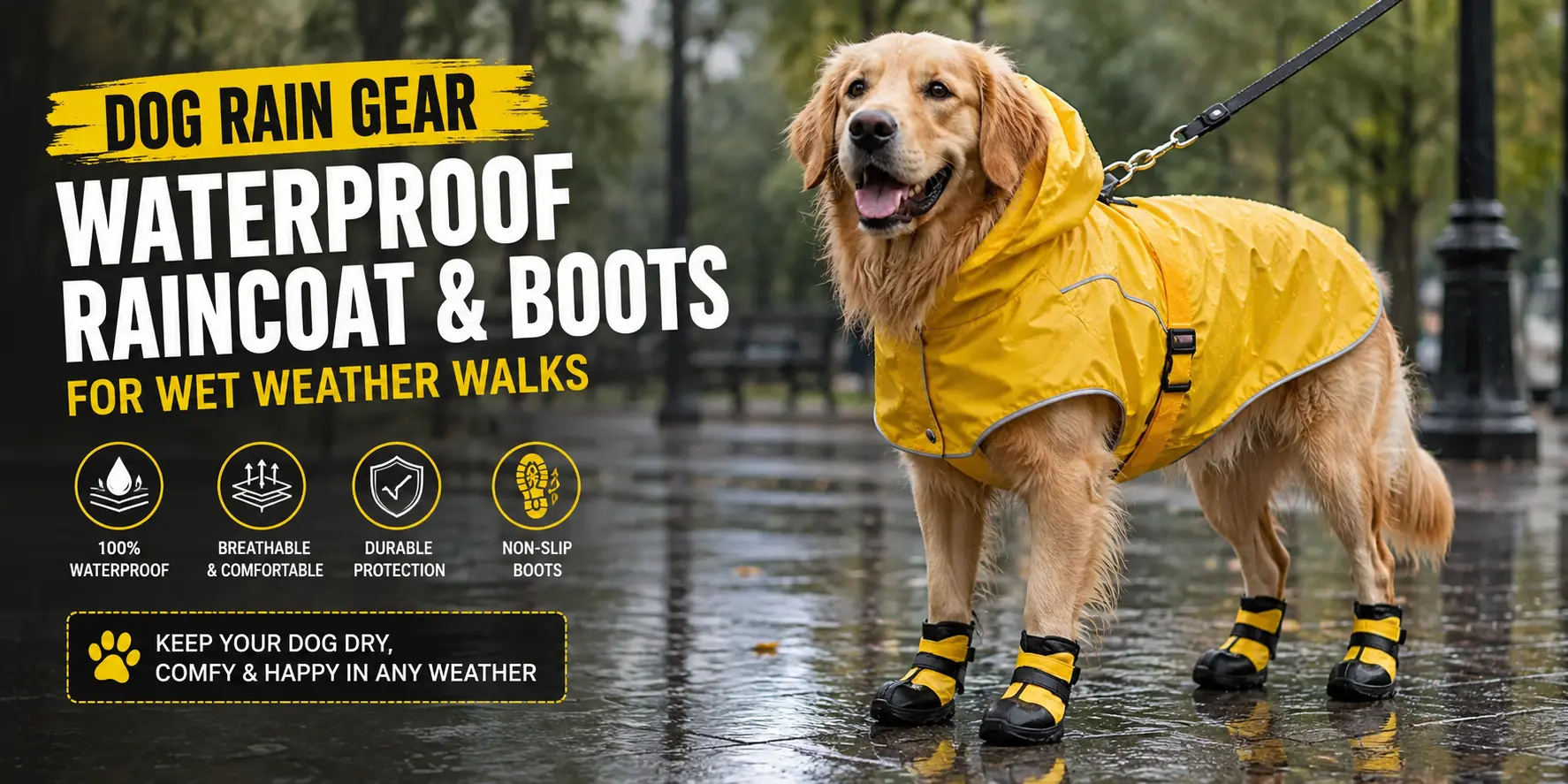
Why High-Quality Dog Rain Gear Matters
Walking your dog in heavy rain or damp post-storm conditions presents challenges beyond simple discomfort. Equipping your pup with functional wet-weather apparel solves three major issues:
- Hypothermia & Chill Prevention: Short-haired, small, senior, or low-to-the-ground breeds lose body heat rapidly when their fur absorbs water.
- Skin Health & Sanitation: Wet fur creates a breeding ground for bacteria and yeast, leading to hot spots, skin irritations, and the infamous “wet dog smell.”
- Home Cleanliness: Proper outerwear reduces wet mud, road salt, and debris tracked across carpets and furniture by up to 80%.
Essential Types of Dog Rain Gear
Depending on your dog’s coat structure, activity level, and local weather patterns, different gear combinations deliver optimal protection.
| Gear Category | Best For | Key Features | Primary Material |
| Full-Coverage Raincoats | Long walks, heavy downpours, short coats | Belly panels, harness portals, high collars | Ripstop Polyester with TPU coating |
| Lightweight Rain Ponchos | Warm rainy days, sudden showers, travel | Packable, quick-snap closures, ultralight | Waterproof Nylon |
| All-Weather Rain Boots | Urban walks, muddy trails, salt protection | Non-slip rubber soles, adjustable straps | Rubber / Neoprene |
| Pet Umbrellas | Small breeds, rain-averse toy dogs | Attached leash, overhead transparent canopy | Stainless Steel frame, TPU canopy |
Essential Features to Look For in Dog Rain Apparel
Not all protective apparel performs equally when exposed to prolonged rain. Look for these crucial design elements before buying:
1. True Waterproofing vs. Water Resistance
Water-resistant jackets only repel light mist for a few minutes. For reliable protection, select gear made from breathable waterproof fabrics (such as TPU-laminated polyester or Gore-Tex) rated to handle continuous downpours. Look for taped or sealed seams so water cannot leak through the stitching.
2. Secure Harness & Leash Access Points
Quality raincoats feature covered leash portals along the back seam, allowing you to attach a leash directly to a harness underneath without exposing your dog’s back to moisture.
3. High-Visibility Safety Accents
Overcast skies and heavy rainfall drastically reduce driver visibility. High-performance gear integrates 360-degree 3M reflective striping along the ribs, neck, and hemline to keep your dog visible during early morning or nighttime walks.
4. Full Belly & Chest Coverage
Low-clearance dogs (like Dachshunds or Corgis) take the brunt of splashback from puddles. Choose jackets with extended chest and underbelly coverage to keep their core clean and dry.
How to Accurately Measure Your Dog for Rain Gear
A poor fit compromises waterproof coverage and causes painful chafing. Follow these three steps to secure the correct size:
- Back Length: Measure along the spine from the base of the neck (where the collar rests) to the base of the tail.
- Chest Girth: Wrap the tape around the widest part of your dog’s ribcage, usually right behind the front legs. Add 1–2 inches for movement space.
- Neck Circumference: Measure around the base of the neck. Ensure you can comfortably slide two fingers under the measuring tape.
Caring for Your Dog’s Wet Weather Gear
Maintaining the waterproof integrity of rain apparel requires proper care:
- Rinse After Dirty Walks: Wash away mud and road salt immediately with cool water to avoid damaging fabric coatings.
- Use Mild Detergent: Wash on a gentle cycle using additive-free, liquid detergent. Never use fabric softeners or bleach, which break down waterproof membranes.
- Air Dry Only: Hang the gear to dry away from direct heat sources. Tumble drying on high heat can melt protective coatings and compromise seam seals.