
Finding the right water fountain for your dog comes down to two primary materials: 304 food-grade stainless steel and BPA-free plastic. While plastic fountains attract budget-conscious dog owners, stainless steel models dominate veterinary recommendations for longevity, safety, and hygiene.
This comparison breaks down health risks, maintenance demands, durability, and cost so you can choose the best fountain for your pet.
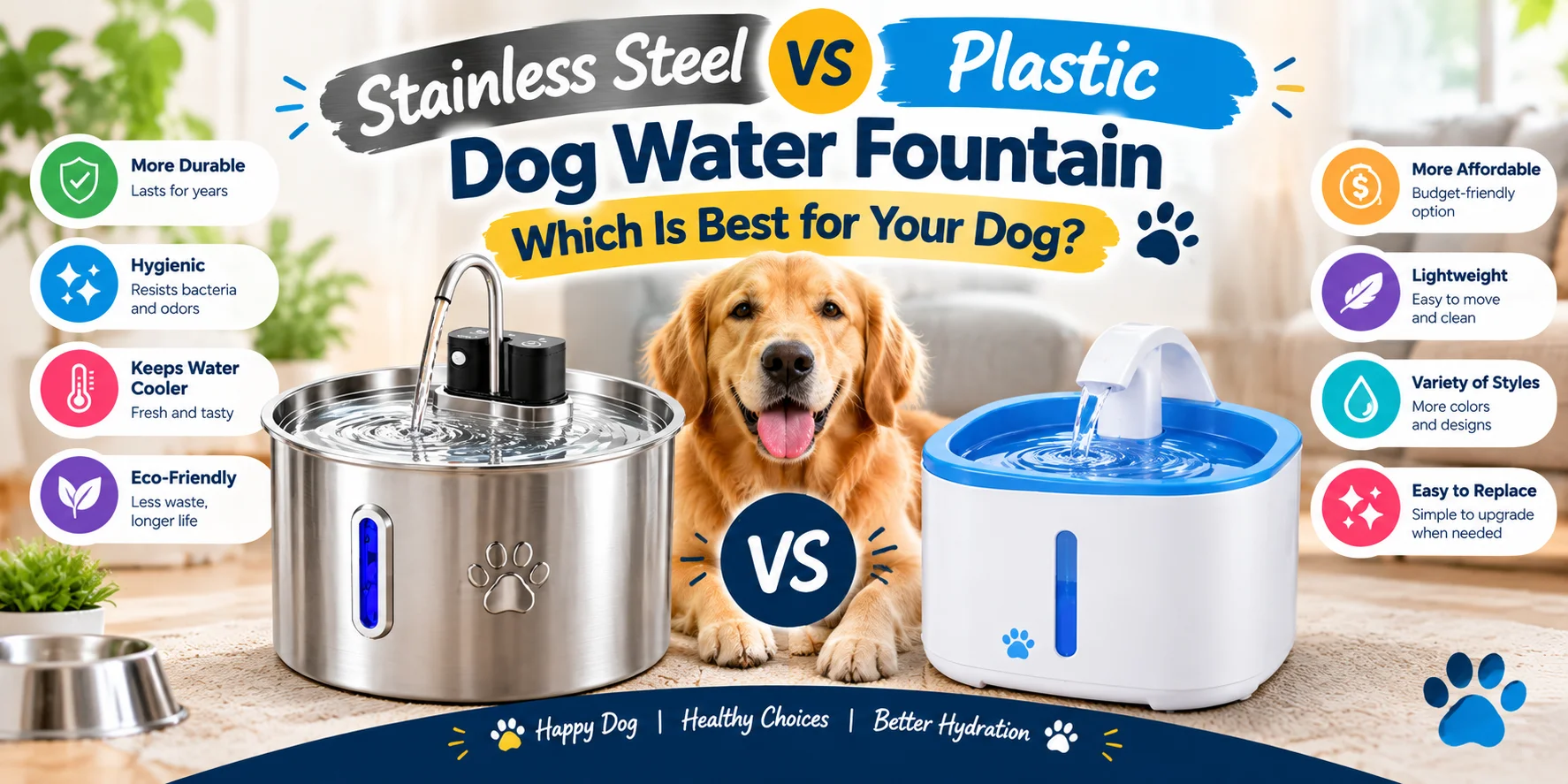
Quick Comparison: Stainless Steel vs Plastic
| Feature | Stainless Steel Fountains | Plastic Fountains |
| Bacterial Hygiene | Non-porous; prevents slime & bacteria buildup | Porous over time; micro-scratches harbor bacteria |
| Durability | Virtually indestructible; scratch & chew-proof | Prone to cracking, warping, and tooth scratches |
| Pet Health Safety | 100% non-toxic & chemical-free | Risk of chemical leaching & canine chin acne |
| Cleaning & Maintenance | Top-rack dishwasher safe; simple to scrub | Harder to sanitize; requires careful hand scrubbing |
| Odor & Staining | Resists odors, flavor retention, and rust | Absorbs foul odors and mineral stains |
| Average Cost | $35 – $70 (Higher initial cost, long lifespan) | $15 – $35 (Lower initial cost, frequent replacement) |
1. Hygiene & Bacterial Safety
Water fountains sit wet all day, making them prone to biofilm—a slimy layer of bacteria and algae that grows rapidly on moist surfaces.
Stainless Steel Fountains
Stainless steel (specifically food-grade 304 steel) is naturally non-porous. Bacteria and fungi cannot penetrate its surface, allowing water to stay fresher for longer. Scrubbing stainless steel removes slime completely without dulling or damaging the metal.
Plastic Fountains
Plastic is soft. Even when labeled “BPA-free,” plastic surfaces develop invisible micro-scratches from sponges, dog claws, or coarse dog hair. These micro-crevices trap organic debris, creating an ideal environment for bacteria to colonize. Even after thorough scrubbing, bacteria inside scratches often survives.
Winner: Stainless Steel. It provides a significantly cleaner drinking environment and reduces bacterial risks.
2. Canine Health Impact: Acne & Leaching
The material your dog drinks from directly affects their skin and health.
- Canine Acne & Skin Irritation: Dogs with sensitive skin often develop red bumps, pustules, or hair loss around their chin and muzzle (canine chin acne). This reaction is frequently caused by contact with bacteria multiplying inside the scratches of plastic drinking trays. Switching to a stainless steel fountain eliminates this contact surface hazard.
- Chemical Exposure: Low-grade plastic fountains can degrade under heat or direct sunlight, potentially leaching plasticizers or chemical odor compounds into standing water. Stainless steel is chemically inert, meaning zero toxins leach into your dog’s water supply.
Winner: Stainless Steel. It prevents skin allergies and eliminates chemical exposure.
3. Durability & Lifespan
Dog fountains take abuse from heavy drinking, pawing, nudging, and accidental drops during cleaning.
- Stainless Steel: Rust-resistant, shatterproof, and chew-resistant. A stainless steel fountain can easily last 3 to 5+ years with simple pump maintenance.
- Plastic: Prone to stress fractures, warping when washed in high-heat dishwashers, and yellowing from hard water minerals. Most plastic fountains need full replacement every 6 to 12 months due to wear and bacterial buildup.
Winner: Stainless Steel. High impact resistance makes it far superior for long-term daily use.
4. Ease of Cleaning & Dishwasher Safety
Neglecting pet fountain sanitation leads to clogged pumps and stagnant water.
- Stainless Steel Care: Disassembles quickly and can withstand high-temperature dishwasher cycles for total sterilization. Mineral deposits from hard water wipe off easily with a mild vinegar rinse without dulling the finish.
- Plastic Care: Requires hand-washing with non-abrasive sponges to avoid scratching. Hot water in dishwashers can warp cheap plastic parts, creating gaps where water leaks.
Winner: Stainless Steel. Sanitizes effortlessly in the dishwasher without surface degradation.
5. Noise & Water Capacity
Noise level depends on two factors: motor quality and water drop distance.
- Noise Level: Plastic naturally dampens vibration sounds slightly better than thin metal. However, premium stainless steel fountains solve this by using ultra-quiet, low-voltage submersible pumps (<30 dB) and sloped water ramps that eliminate loud dripping sounds.
- Water Visibility: Plastic fountains often feature translucent water tanks, allowing you to check water levels at a glance. Stainless steel fountains rely on built-in water windows or smart LED indicators to show when a refill is needed.
Winner: Tie. Plastic offers easier water level visibility, but modern stainless steel fountains match plastic on whisper-quiet operation.
The Verdict: Which Fountain Should You Buy?
Choose Stainless Steel If:
- You prioritize hygiene, low bacterial risk, and easy cleaning.
- Your dog suffers from sensitive skin, allergies, or chin acne.
- You want a long-lasting, dishwasher-safe fountain built for multi-pet or large-dog homes.
Choose Plastic If:
- You need an entry-level fountain on a tight budget ($15 – $25).
- You want a lightweight, temporary option for travel or short-term use.
- You are willing to hand-wash the basin frequently and replace the unit annually.
Frequently Asked Questions (FAQs)
Why does my dog’s plastic fountain smell bad even after washing?
Plastic is a porous material that absorbs organic oils and odors over time. Once bacteria and saliva penetrate micro-scratches inside the plastic basin, standard dish soap cannot fully strip the trapped odors.
How often should I replace the water in a stainless steel fountain?
Even with built-in multi-stage filtration, top off fresh water daily and perform a complete water swap and deep clean of the basin and pump every 7 to 10 days.
Are stainless steel dog fountains safe for dishwashers?
Yes. The stainless steel basin, drinking tray, and metal covers are top-rack dishwasher safe. Always remove the electric pump, cord, and filter before placing metal components in the dishwasher.