
Finding the best leash for pulling dogs can make walks easier to manage, but the leash itself is only part of the solution. Dogs pull for many reasons—they may be excited by smells, people, other dogs, or simply want to move faster than we do. The right walking equipment can improve control and comfort, while consistent loose-leash training helps change the behavior.
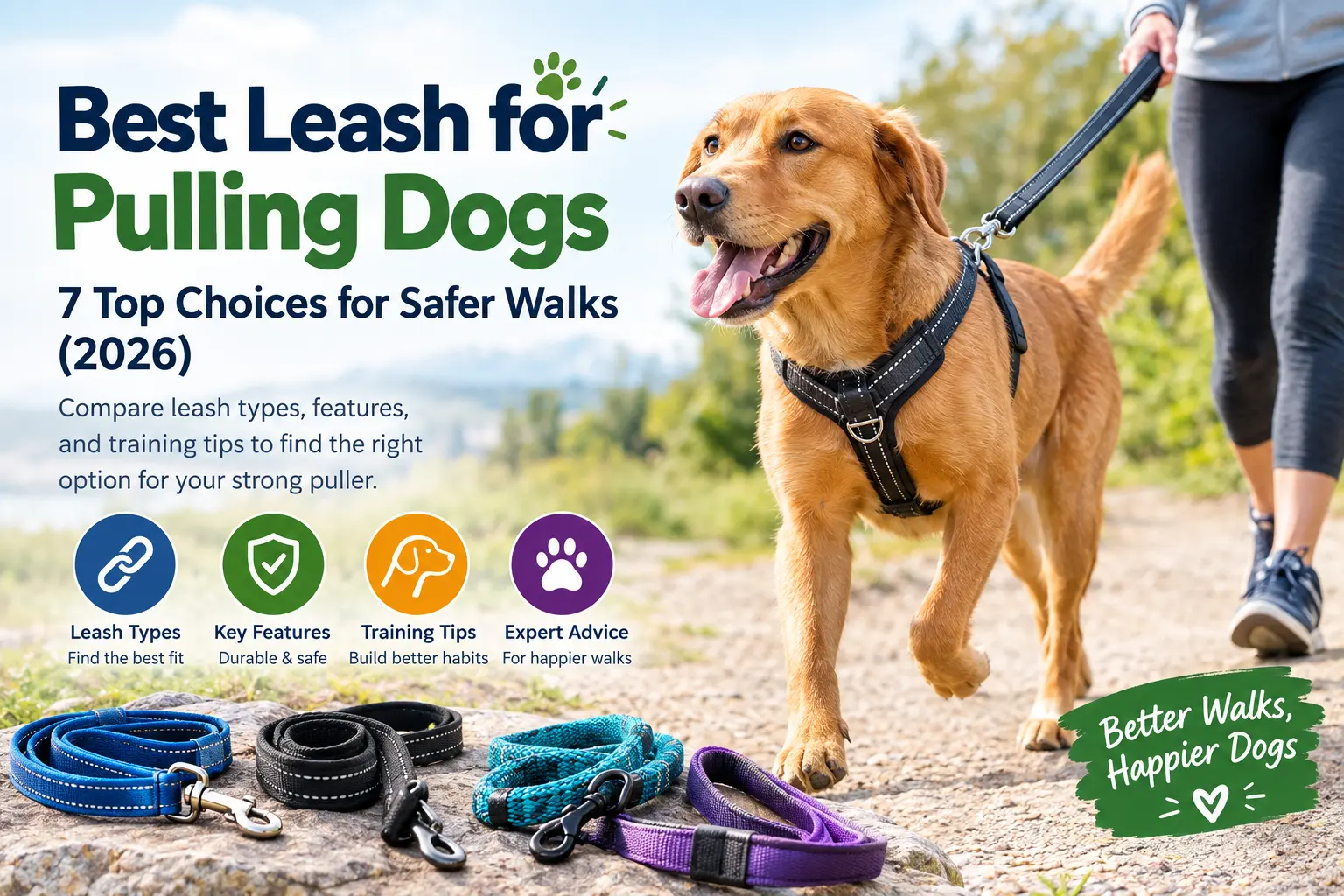
In this guide, we’ll explain what to look for in a leash for a pulling dog, compare the most useful leash types, discuss harness compatibility, and share practical training techniques you can use during everyday walks.
Quick Answer: What Is the Best Leash for a Pulling Dog?
For most dogs that pull, a strong, fixed-length leash used with a properly fitted harness is a good starting point. A leash around 4–6 feet gives you useful control without giving your dog excessive distance.
For particularly strong pullers, a front-clip no-pull harness paired with a sturdy leash can provide better handling. American Humane recommends choosing equipment that supports comfort and control and notes that a properly fitted harness can distribute pressure across the chest rather than concentrating it on the neck.
However, no leash should be expected to solve pulling by itself. The goal should be to teach your dog that a loose leash allows the walk to continue.
7 Best Leash Types for Pulling Dogs
Different dogs have different walking needs. Instead of looking for one magical leash, consider your dog’s strength, size, behavior, and training level.
1. Standard 6-Foot Leash — Best Overall
A traditional 6-foot leash is one of the most versatile options for everyday walks.
It provides enough freedom for your dog to sniff and explore while keeping them reasonably close when you need more control.
Why we like it
- Easy to use
- Suitable for everyday walks
- Provides predictable control
- Works well with most harnesses
- Available in many materials and widths
- Easier to manage than an extra-long leash
For a dog that occasionally pulls, a standard leash combined with proper loose-leash training can be an excellent choice.
Best for: Everyday walking and dogs learning leash manners.
2. Front-Clip Harness + Leash — Best for Strong Pullers
If your dog regularly pulls hard, consider using a sturdy leash with a properly fitted front-clip harness.
The leash attaches to a point toward the front of the dog’s chest rather than directly behind the shoulders. This setup can give the handler additional control when the dog moves forward.
Some humane organizations specifically recommend no-pull harnesses for dogs that are difficult to manage because of pulling.
Important
A no-pull harness should not be viewed as a substitute for training.
Use it as a management tool while teaching your dog to walk with a relaxed leash.
Best for: Strong dogs and persistent pullers.
3. Heavy-Duty Leash — Best for Powerful Dogs
Large and powerful dogs need equipment that can withstand their strength.
Look for:
- Strong stitching
- A reliable metal clip
- Comfortable but durable handle
- Appropriate leash width
- High-quality materials
- Secure connection points
Avoid choosing a leash simply because it is labeled “heavy duty.” Check the construction and hardware carefully.
A leash should also be inspected regularly for fraying, damaged stitching, cracked hardware, or other signs of wear.
Best for: Large breeds and powerful pullers.
4. Double-Handle Leash — Best for Extra Control
A double-handle leash gives you two gripping positions.
One handle is typically near the end of the leash, while a second handle is closer to the attachment point.
This can be useful when you need your dog to stay closer to you, such as:
- Busy sidewalks
- Crowded parks
- Crossing streets
- Training sessions
- Areas with many distractions
You can use the longer handle for normal walking and move to the shorter handle when additional control is needed.
Best for: Urban walks and dogs that need closer handling.
5. Rope Leash — Best for Durability
Rope leashes are popular because they can combine flexibility with durability.
A quality rope leash can be especially useful for active dogs and owners who want something comfortable to hold.
Look for reinforced attachment points and a secure clasp.
However, remember that durability does not automatically mean better control. The leash still needs to be paired with suitable equipment and training.
Best for: Active dogs and outdoor walking.
6. Traffic Leash — Best for Crowded Areas
A traffic leash is designed for situations where you need your dog very close.
Its shorter length makes it easier to keep your dog beside you in places where there isn’t much room.
It can be useful for:
- Sidewalks
- Veterinary visits
- Pet-friendly stores
- Busy public areas
- Training situations
For everyday relaxed walks, however, a standard-length leash is usually more practical.
Best for: Short-distance control in busy environments.
7. Hands-Free Leash — Best for Active Owners
Hands-free leashes attach around your waist or across your body.
They can be convenient for activities such as walking or hiking, but they aren’t automatically the best choice for a dog that pulls strongly.
If your dog can suddenly lunge or accelerate, connecting a powerful dog directly to your body can create balance and safety concerns.
Use this style only when your dog is reasonably responsive and you can maintain safe control.
Best for: Dogs with good leash manners and active owners.
What Makes a Good Leash for a Pulling Dog?
When shopping for the best leash for pulling dogs, don’t focus only on the product’s appearance.
Consider these important features.
1. Strong Hardware
The clip is one of the most important parts of a leash.
Look for a secure metal attachment that is appropriate for your dog’s size and strength.
2. Comfortable Handle
A dog that pulls can put significant pressure on your hand.
A padded or ergonomically designed handle can make longer walks more comfortable.
3. Appropriate Length
For general walking, a leash around 4–6 feet is often practical.
Pasadena Humane specifically recommends 4–6-foot leashes for loose-leash walking and discourages retractable leashes for this purpose.
4. Durable Construction
Look for reinforced stitching and materials designed to withstand regular use.
Inspect the leash frequently, particularly if your dog is powerful or frequently pulls.
5. Compatibility With Your Harness
Your leash should work securely with your dog’s collar or harness.
For dogs that pull, many owners choose to use a properly fitted harness to help distribute pressure more comfortably.
Leash vs. Harness: Which Is Better for a Pulling Dog?
This is one of the most common questions dog owners ask.
The leash and harness perform different jobs.
The leash provides connection and control.
The harness provides a way to attach the leash to your dog while distributing pressure across the body.
For many pulling dogs, a properly fitted harness can be a useful option because it can reduce pressure on the neck compared with relying on a collar alone. American Humane recommends considering a properly fitted harness for dogs that pull.
A good combination can therefore be:
Front-clip harness + sturdy 4–6-foot leash + positive reinforcement training
The exact equipment should depend on your individual dog’s size, behavior, and needs.
Why Do Dogs Pull on the Leash?
Understanding why your dog pulls can help you choose better equipment and training methods.
Dogs may pull because they want to:
- Reach an interesting smell
- Investigate another dog
- Greet a person
- Explore a new environment
- Move faster
- Chase something
- Reach a favorite location
In other words, pulling can be rewarding.
Wisconsin Humane Society explains that dogs can learn that pulling gets them closer to something they want. If forward movement continues while the leash is tight, the pulling behavior may be reinforced.
That’s why simply buying a stronger leash isn’t always enough.
How to Stop a Dog From Pulling on the Leash
The best leash works much better when combined with training.
Step 1: Start Somewhere Quiet
Don’t begin training in the middle of a crowded park.
Start inside your home, backyard, or another low-distraction environment.
Once your dog understands the behavior, gradually increase the level of distraction.
Step 2: Reward a Loose Leash
When your dog walks beside you without tension, reward them with praise, treats, or another reward they enjoy.
This teaches your dog that staying near you is worthwhile.
Step 3: Stop When the Leash Gets Tight
If your dog pulls forward, stop walking.
Wait until the leash becomes loose again before continuing.
This is commonly described as a “red light, green light” approach: tension stops forward movement, while a loose leash allows the walk to continue.
Step 4: Don’t Yank the Leash
Repeatedly pulling backward against a pulling dog can create more tension.
Humane Society guidance recommends avoiding leash yanking and instead stopping or changing direction when the dog pulls.
Step 5: Reward Check-Ins
Whenever your dog looks at you voluntarily, reward the behavior.
Over time, these check-ins can help your dog pay more attention to you instead of constantly focusing on distractions.
Step 6: Increase Difficulty Gradually
Once your dog can walk calmly at home, move to:
- Backyard
- Quiet sidewalk
- Neighborhood
- Busier areas
- Parks and other distracting environments
Don’t rush the process.
Are Retractable Leashes Good for Dogs That Pull?
Generally, a retractable leash isn’t my first choice for a dog that already pulls.
Retractable leashes provide variable length and can allow dogs to maintain tension while moving farther away from the handler.
Some humane organizations specifically discourage retractable leashes for loose-leash training because they can reinforce pulling behavior.
For a pulling dog, a fixed-length leash is usually easier to manage and more consistent for training.
What Leash Length Is Best for a Pulling Dog?
For everyday walking, a 4–6-foot leash is a practical starting point.
A 6-foot leash gives your dog room to sniff and explore while keeping enough control for normal sidewalks and neighborhood walks.
A shorter traffic leash can be useful when you need your dog very close.
Long lines are better suited to controlled training or open areas where you have sufficient space.
What Should You Avoid When Choosing a Leash?
Avoid choosing a leash solely because it promises to “stop pulling.”
Also be cautious about:
Extremely thin leashes
They may not be appropriate for strong dogs.
Damaged hardware
A worn or unreliable clip can create a serious escape risk.
Excessively long leashes for busy sidewalks
Extra length can make it harder to manage a pulling dog around people, traffic, and other animals.
Equipment that causes pain
The goal should be safe management and behavior training rather than relying on discomfort.
Positive, reward-based approaches are widely recommended for building better leash manners. American Humane, for example, recommends rewarding calm walking and using positive reinforcement.
How We Would Choose the Best Leash for Pulling Dogs
When comparing products, use this checklist:
| Feature | What to Look For |
|---|---|
| Length | Around 4–6 feet for everyday walking |
| Clip | Strong, secure attachment |
| Handle | Comfortable and easy to grip |
| Material | Durable construction |
| Control | Compatible with your dog’s harness |
| Visibility | Reflective elements can be useful at night |
| Size | Appropriate for your dog’s weight and strength |
| Training | Works well with loose-leash training |
The “best” leash isn’t necessarily the most expensive one.
It is the one that gives you reliable control, is appropriate for your dog’s size, and works with a training approach that encourages relaxed walking.
Best Leash Setup for Different Types of Dogs
Small dogs
Try a lightweight but durable leash that doesn’t overwhelm your dog.
Medium dogs
A standard 4–6-foot leash is often a good starting point.
Large dogs
Look for stronger materials, secure hardware, and a comfortable handle.
Very strong pullers
Consider a properly fitted no-pull/front-clip harness paired with a sturdy fixed-length leash.
Dogs that lunge
Prioritize management, distance from triggers, and professional training if necessary. Equipment alone shouldn’t be relied upon to control severe lunging.
Frequently Asked Questions
What is the best leash for a dog that pulls hard?
A sturdy fixed-length leash paired with a properly fitted harness is a strong starting point. For powerful pullers, a front-clip harness can provide additional handling support. However, training remains essential.
Is a no-pull leash better than a regular leash?
A no-pull setup can provide additional control, but the terminology varies between products. Often, the anti-pulling effect comes from the harness or attachment configuration rather than the leash itself.
Should I use a harness or collar for a dog that pulls?
A properly fitted harness can be a useful choice for many dogs that pull because it can distribute pressure across the chest instead of concentrating it around the neck.
What length leash is best for training a pulling dog?
A 4–6-foot fixed leash is a practical choice for most everyday loose-leash training.
Do no-pull leashes stop dogs from pulling?
Not necessarily. Equipment can help with management and control, but dogs still need to learn appropriate leash behavior.
Are retractable leashes good for dogs that pull?
They are generally not the first choice for loose-leash training. A fixed-length leash makes it easier to consistently teach your dog that a loose leash allows forward movement.
How can I stop my dog from pulling without hurting them?
Use reward-based loose-leash training. Stop when the leash becomes tight and reward your dog when they return to a relaxed leash. Humane organizations recommend positive reinforcement and avoiding harsh leash handling.
Final Verdict: What’s the Best Leash for Pulling Dogs?
For most dog owners, the best starting point is a durable 4–6-foot fixed leash paired with a properly fitted harness.
If your dog is a strong puller, a front-clip/no-pull harness may provide additional control. A double-handle leash can also be useful when you need your dog closer in busy environments.
But remember: the leash is a tool, not the training.
The most effective approach is to combine suitable equipment with consistent loose-leash training. Reward your dog for walking calmly, stop when the leash becomes tight, and gradually introduce more distracting environments.
With patience and consistency, walks can become much more enjoyable for both you and your dog.