
Taking your dog on outdoor adventures or road trips is one of the most rewarding parts of pet ownership. However, securing a dog on a zipline—whether it is a backyard overhead run, a camping tether line, or an in-car safety line—requires equipment built for dynamic movement.
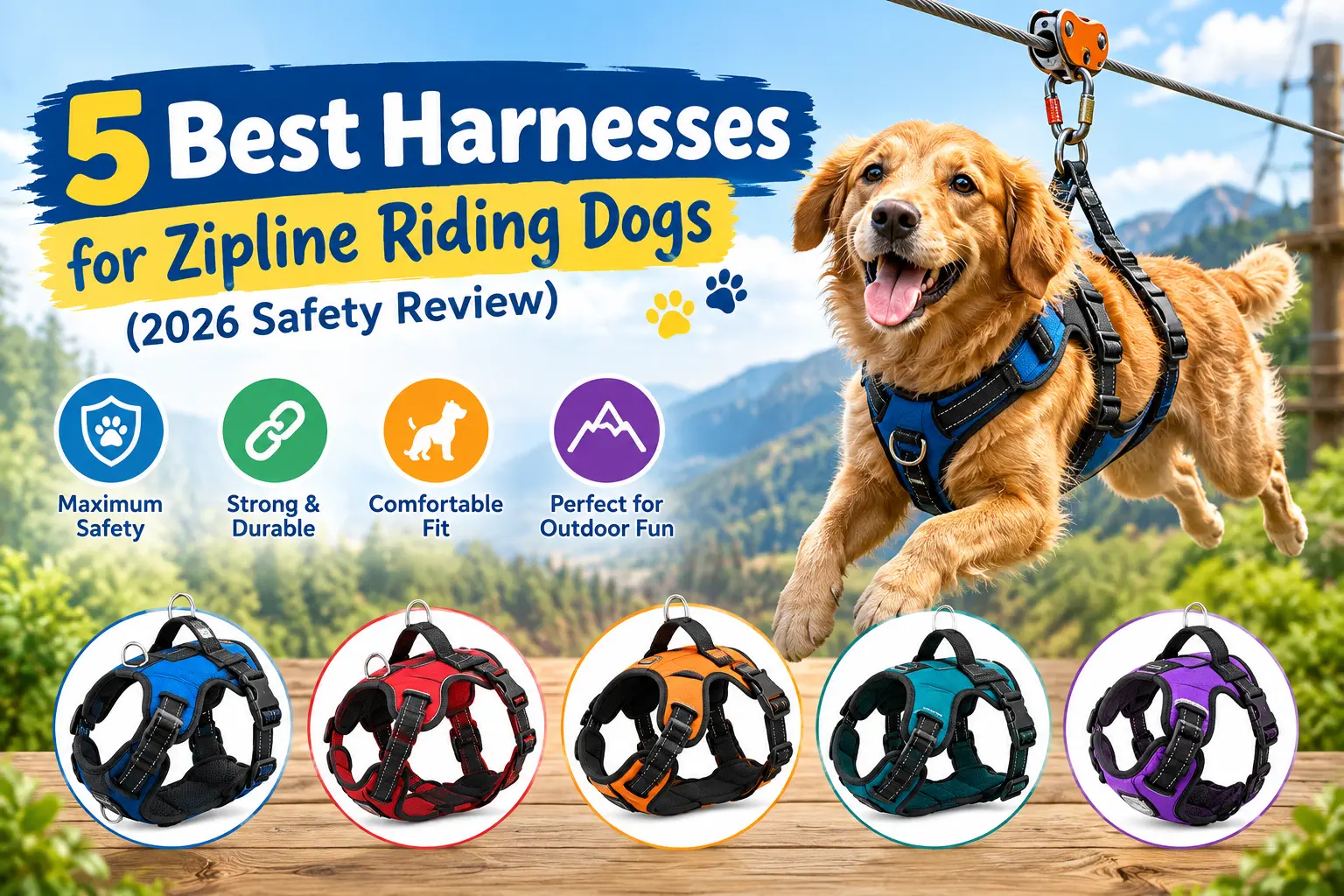
Using a regular collar or a cheap walking harness on a zipline creates serious safety hazards, including trachea strain, harness slipping, or hardware failure. Finding the best harness for zipline riding dogs means prioritizing heavy-duty hardware, reinforced attachment points, and ergonomic weight distribution.
Top Picks at a Glance
| Harness Name | Best For | Hardware Material | Adjustment Points | Key Safety Feature |
| Ruffwear Front Range | Best Overall | Reinforced Webbing / Aluminum | 4 Points | Padded chest & belly panel |
| Kurgo Tru-Fit Smart Harness | Best for Car & Camping Ziplines | All-Steel Nesting Buckles | 5 Points | Crash-tested up to 75 lbs |
| Julius-K9 IDC Powerharness | Best Heavy-Duty / Large Breeds | Heavy-Duty Steel D-Ring | 2 Points | High-load distribution handle |
| Rabbitgoo No-Pull Harness | Best Budget Option | Alloy Steel D-Ring | 4 Points | Dual D-ring with reflective trim |
What to Look for in a Zipline Harness for Dogs
When tethering a dog to an overhead or horizontal zipline, standard walking harnesses fall short. Here are the critical factors to inspect before clipping in:
- Back D-Ring Placement & Strength: Never attach a zipline carabiner to a front chest clip or a neck ring. Look for a reinforced aluminum or steel D-ring positioned centrally between the shoulder blades.
- Steel Nesting Buckles: Plastic side-release buckles can snap under sudden tension or lateral load. Steel nesting buckles provide structural integrity during movement.
- Multi-Point Adjustment: Look for 4 to 5 adjustment points. A loose harness allows the dog to back out or slip sideways when suspended or pulled.
- Padded Chest and Belly Plates: If a dog reaches the end of the line, padded panels absorb impact and prevent choking or soft-tissue injury.
Detailed Reviews of the Best Harnesses for Zipline Riding Dogs
1. Ruffwear Front Range Dog Harness — Best Overall
The Ruffwear Front Range tops the list due to its exceptional structural stability and all-day comfort. Designed for rugged outdoor activities, it features a foam-padded chest and belly panel that distributes weight evenly across the dog’s torso if the line pulls back.
- Key Features: Anodized aluminum V-ring on the back, 4 adjustment points, high-visibility reflective trim.
- Pros: Ergonomic fit prevents slipping; light yet durable padding.
- Cons: Sizing runs slightly snug; requires precise adjustment across all 4 points.
- Verdict: The ideal choice for active outdoor dogs riding overhead camping ziplines or yard runs.
2. Kurgo Tru-Fit Smart Harness — Best for Car & Travel Ziplines
If your goal includes running a zipline system inside an SUV or vehicle backseat, the Kurgo Tru-Fit is the industry standard. It features steel nesting buckles modeled after rock-climbing harnesses, engineered to hold up against high-velocity force.
- Key Features: All-steel hardware, 5 adjustment points, broad chest plate.
- Pros: Crash-tested; pairs directly with Kurgo auto zip-line systems.
- Cons: Heavier than standard nylon walking harnesses.
- Verdict: Unbeatable for safety conscious owners setting up vehicle or high-tension travel lines.
3. Julius-K9 IDC Powerharness — Best Heavy-Duty Choice
For large, strong breeds like German Shepherds or Labradors, the Julius-K9 IDC Powerharness offers commercial-grade security. The heavy-duty back handle and reinforced back ring give owners complete control when attaching to zipline pulley systems.
- Key Features: Heavy-duty steel D-ring, water-repellent outer shell, integrated handle.
- Pros: Exceptionally easy to put on; withstands heavy pull force.
- Cons: Less chest padding underneath compared to full-body tactical harnesses.
- Verdict: Built for large, powerful dogs who need structural strength on high-load lines.
4. Rabbitgoo No-Pull Harness — Best Budget Option
For pet owners looking for a budget-friendly solution for lightweight yard ziplines, Rabbitgoo offers solid functionality. It features two metal D-rings and fully adjustable straps that wrap securely around the ribcage.
- Key Features: Breathable mesh lining, dual-metal attachment points, bright reflective strips.
- Pros: Budget-friendly price point; lightweight and breathable.
- Cons: Utilizes plastic quick-release buckles instead of steel nesting buckles.
- Verdict: A great entry-level option for small to medium dogs on low-tension overhead runs.
Safety Tips for Using a Harness on a Dog Zipline
- Never Attach a Zipline to a Neck Collar: Always use a back-clip harness. Attaching a zipline to a collar can cause fatal neck trauma or strangulation during sudden stops.
- Use a Swivel Carabiner: Always connect the harness D-ring to the zipline using a 360-degree swivel clip or swivel carabiner to prevent the line from twisting as the dog turns.
- Inspect Hardware Regularly: Check stitching around the D-ring and buckle retention clips before every use for sign of fraying or fatigue.
- Maintain Proper Line Height: Ensure an overhead zipline is high enough that the leash tether cannot wrap around the dog’s legs or neck.
Frequently Asked Questions
Can I use a normal walking harness for a dog zipline?
Standard walking harnesses with plastic side buckles are not rated for tension force. Use a harness with steel buckles or reinforced back D-rings for zipline activities.
Where should the clip attach on a zipline harness?
Always attach the tether or carabiner to the back D-ring located between the dog’s shoulder blades. Never attach zipline hardware to a chest ring or collar ring.
How tight should a dog harness fit for ziplining?
You should be able to fit two fingers flat between the harness straps and your dog’s coat. Anything looser risks the dog slipping out when suspended on the line.